Poy-Sian, Hong Thai and Siang Pure: a look at the best-known Thai inhalers
If you have ever been to Thailand, you know the little tubes: at the supermarket till, in the side pocket of a handbag, on the dashboard of a taxi. Three names keep coming up – Poy-Sian, Hong Thai and Siang Pure. In Europe they are far less familiar, but they are imported and sold online. We have put together what can factually be said about the three best-known Thai inhaler brands: origin, format, the ingredients typically declared, and how you actually get hold of them here. At the end we place Sniffler in that picture – and are clear about where it does not belong.
What "Ya Dom" actually refers to
In Thailand, Ya Dom (ยาดม) is the umbrella term for this product category. ยา (ya) means remedy or preparation, ดม (dom) means to sniff or to smell. It does not describe one specific product but a whole genre: small, portable sniffing bottles and inhaler sticks that have been part of daily life in Thailand for decades and are sold for a few baht in supermarkets, kiosks and convenience stores.
That is why "Ya Dom brands" is a more useful search than "the Thai inhaler" – there are dozens of manufacturers, and the three described here are simply the most visible internationally. One thing matters for context: this is a distinct Thai product category with its own history, formats and recipes. We describe it here because people often search for it alongside Sniffler, not because the two are the same thing.
Poy-Sian
Poy-Sian is the most widely known of the three brands internationally and comes from the Thai manufacturer Bertram Chemical. The most common version is called "Poy-Sian Mark II": a slim plastic stick around seven to eight centimetres long with a screw cap. The distinctive feature of the Mark II format is that it has two parts. The top holds the inhaler stick with a saturated wick; at the bottom a second cap unscrews to reveal a liquid oil.
For the inhaler sticks, the declaration typically lists menthol, camphor, borneol, eucalyptus oil and peppermint oil; depending on the version, the liquid component also lists methyl salicylate. Several scent variants exist, identifiable by different cap colours. In Thailand a stick usually costs just a few baht; in Europe the price is considerably higher once import and shipping are factored in.
Hong Thai
Hong Thai is the brand that looks most different from the other two. In its best-known form the inhaler is a tube containing a visible, ground blend of herbs and spices – so you actually see plant material inside the container rather than just a saturated wick.
The declarations here also list the components typical of the category, such as menthol, camphor and borneol, plus clove and other dried botanical ingredients depending on the version. The exact make-up of the blend varies between versions, and the language on the packaging can vary with the import route – Thai, English, or both side by side. If you want to know precisely what is in it, ask the seller for a complete ingredient list in a language you read before ordering.
Siang Pure
With Siang Pure it pays to look closely at the format, because the brand name alone does not tell you what you are getting. Siang Pure is a product family: alongside the inhaler stick it includes liquid oils (known as Formula I and Formula II) and balm versions. If you order "Siang Pure" online, check that the item really is an inhaler.
The inhaler stick is usually declared with menthol, camphor, borneol, eucalyptus oil and peppermint oil, which makes its base composition very close to the Poy-Sian stick – not surprising, since Siang Pure is also offered by Bertram Chemical. The liquid versions differ noticeably in their declarations, listing additional components such as methyl salicylate or clove oil depending on the formula.
What the three have in common, and where they differ
The aromatic core is similar across all three brands: menthol, camphor, borneol, eucalyptus oil and peppermint oil form the backbone of the category. The differences lie less in radically different recipes than in the details – Hong Thai's visible herb blend brings a warmer, spicier scent note, while Poy-Sian and Siang Pure lean more on the straightforward, menthol-forward accord of the oils.
Two points matter when comparing. First, how much is declared varies. Some packs give percentages for the main components, others simply list ingredients. Second, a single brand covers several formats and editions with different compositions. A brand name on its own is therefore not a reliable guide to what is inside – the specific pack in front of you is.
How Thai inhalers reach buyers in Europe
In practice there are three routes. First, your local Asian supermarket: fast, but the range is a matter of luck. Second, European importers and marketplace sellers who already hold stock inside the EU – delivery is usually two to five working days, but the unit price is well above the Thai shelf price once import, storage and shipping are included. Third, ordering directly from Thailand.
For direct shipping from Thailand, budget for two things. Time: parcels from Southeast Asia realistically take two to four weeks rather than a few days. And import charges: since July 2021 the EU generally no longer has a de-minimis exemption for low-value consignments, so import VAT usually applies from the first euro, while customs duty typically only kicks in above a goods value of 150 euros. Many marketplaces collect the tax at checkout via the IOSS scheme; where they do not, the courier collects the charges plus a handling fee at your door. Buyers in the UK, Switzerland and Norway fall under separate import rules and thresholds, since those countries are not part of the EU customs union. Rates and thresholds change, so check the current rules with the customs authority responsible for you before ordering. One more practical tip: check whether the seller provides a full ingredient list in a language you can read.
Where Sniffler fits into this picture
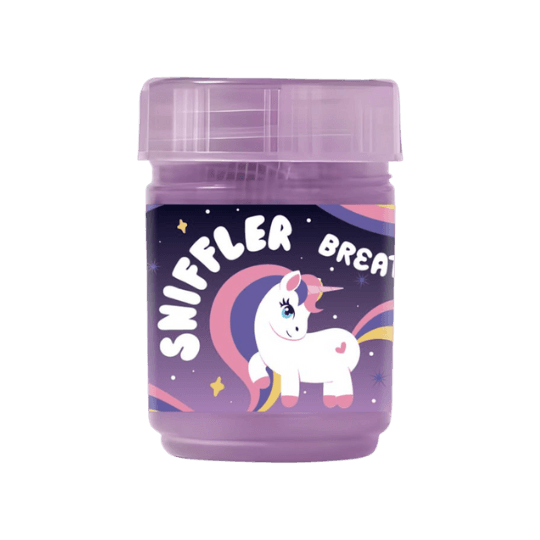
Sniffler is not a Thai product and not a copy of a Thai recipe. We are a European supplier with our own herbal inhaler: a container roughly 3.5 centimetres across and about 5 centimetres tall, filled with dried herbs, flowers and essential oils. You open it and breathe in through your nose. Nothing is burned, nothing is vaporised, nothing is swallowed. Sniffler is not a medicinal product and not a medical device.
The overlap with the Ya Dom category is real but limited. Menthol, borneol, eucalyptus oil and peppermint oil appear in our blend too. Sniffler contains no camphor. The main difference is the ratio: 87 per cent of the blend is dried botanical material, 13 per cent are concentrates and essential oils. In detail: perilla/shiso stems 20%, dried eucalyptus twigs 20%, hawthorn kernels 20%, Polygonum multiflorum vine 7%, liquorice 7%, cinnamon twig 7%, jasmine blossom 6% – plus menthol 6%, borneol 2%, eucalyptus oil 2%, rosemary oil 1%, mint/peppermint oil 1%, essential jasmine oil 1%. No nicotine, no caffeine, no sugar.
The purchasing route differs as well: Sniffler starts at 9.90 euros per unit, ships across the EU as well as to countries such as Norway, Switzerland and the UK, and comes with an ingredient declaration you can read. For shipments within the EU there are generally no additional import charges or customs formalities; deliveries to Switzerland, Norway and the UK fall under those countries' own import rules and thresholds, which are worth checking before you order. None of this is a verdict on Poy-Sian, Hong Thai or Siang Pure – they are simply different recipes, different formats and different supply routes.
What we deliberately do not write
For none of the products mentioned here – including our own – do we make any statements about effects. Sniffler is not a medicinal product, and we neither claim for ourselves nor suggest about other brands that they help with anything. What can be compared are verifiable things: composition, format, origin, price and availability.
Sniffler contains concentrated essential oils and should be kept out of the reach of children. If you are pregnant, sensitive to strong scents, or thinking about using a product like this around children, please speak to a doctor first. We explicitly give no recommendation on that.
Curious about Sniffler?
100% plant-based, no nicotine, no caffeine, no sugar. The full ingredient list with exact percentages is on every product page.
Sniffler is a plant-based lifestyle product, not a medicinal product. This article is general information and not medical advice.